Reviewed · KEMI TOURS
Icetrek to Old Kemi
Walking across the frozen Ostrobothnian Sea to Laitakari is the heart of this Kemi outing. The 0.8-kilometer crossing feels unusual in the best way, then the island adds a real sense of place: this is where Kemi began before the modern city was built.
I like the practical ice lesson and the chance to see an abandoned sawmill village rather than another polished tourist attraction. I also like the clear local story, including how Laitakari’s mill success helped lead Russian Emperor Alexander II to establish Kemi. The drawback is simple: this is an outdoor winter walk, so cold, wind, and changing ice conditions can affect the route and duration.
In This Review
- Key points
- Why Laitakari is the real destination
- Starting at SnowCastle and learning the ice basics
- The 0.8-kilometer crossing to Laitakari
- Exploring the deserted sawmill and village ruins
- The return walk and the rhythm of the outing
- What the $57 price buys you
- Who will enjoy this most
- What to wear and what to expect in winter
- How this compares with a typical Lapland excursion
- Should you book Icetrek to Old Kemi?
- FAQ
- Where does the Icetrek to Old Kemi tour start?
- How long does the experience last?
- How far do you walk?
- What languages are available?
- What is included in the price?
- Is thermal clothing included?
- Can the route change because of weather?
- Who cannot take part?
- Can I cancel for a full refund?
Key points
- Cross the sea ice for 0.8 kilometers between SnowCastle and Laitakari island.
- Learn basic ice-walking technique and use rented icetrekking poles.
- Explore deserted sawmill and village ruins tied to Kemi’s beginnings.
- Hear the wood-industry story that connects Laitakari to the birth of Kemi.
- Spend about two hours with a live English or Finnish guide, often led by Marko.
- Expect 2 to 3 kilometers of walking on mostly flat, snowy ground.
Why Laitakari is the real destination
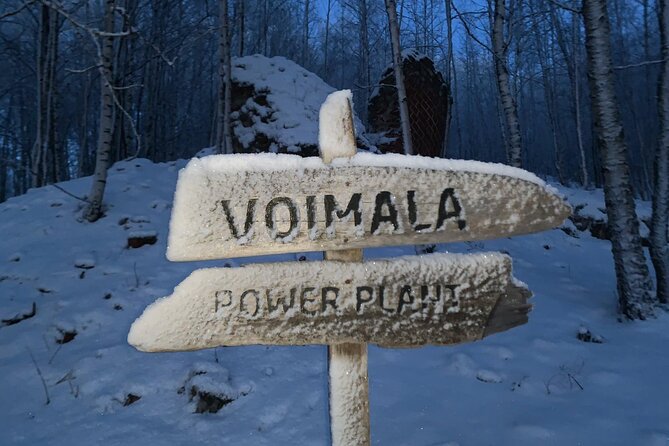
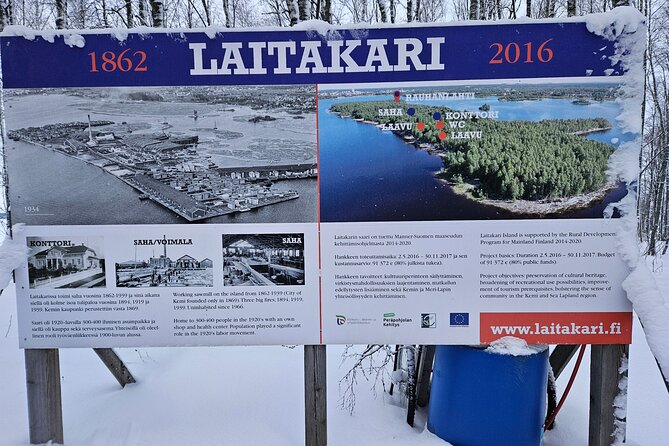
Kemi is known today for its SnowCastle and winter activities, but Laitakari gives you the older story. The island was inhabited and established before Kemi became a city. Its sawmill helped make the area important enough for the city to follow.
That makes this more than a short walk on ice. You are visiting the industrial source of Kemi’s growth, not simply looking at frozen water and snow. The deserted mill site and village ruins give the outing a quiet, slightly eerie character. You can see how a working community once occupied the island, then compare it with the empty site you find today.
I like this kind of history because it stays tied to a real location. The guide can point out the remains and explain how the wood industry operated, rather than giving you a general lecture about Finnish history. You come away with a clearer idea of why Kemi exists where it does.
The story also reaches beyond Finland. Laitakari’s success attracted attention from the Russian Empire, and the information presented on the tour links the mill’s importance with Emperor Alexander II’s decision to build Kemi. That is a useful bit of context when you later walk through the modern city.
A few more Rovaniemi trips worth comparing
- Kemi: Finnish Sight-Skiing Experience in Lapland
★ 5.0 · 50 reviews - Kemi-Tornio: Starguaranteed Northern Lights Auroras
★ 4.0 · 48 reviews - Kemi-Tornio: Husky Sled Ride with Hot Drink
★ 4.8 · 17 reviews
Starting at SnowCastle and learning the ice basics
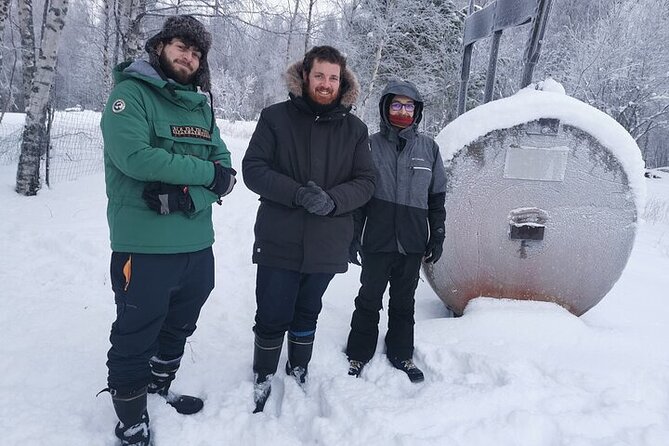
You meet at the SnowCastle of Kemi, in the Experience365 reception hall. The first part of the outing is not rushed. Allow about 15 minutes for the safety briefing and equipment handover before you head out.
This is where the guide explains how to move on ice and snowy ground. You receive icetrekking poles, which give you extra balance and make the walk feel more controlled. The point is not to turn you into a polar explorer. It is to teach simple habits that help you move carefully across a frozen surface.
That briefing matters because walking on sea ice is different from strolling on a paved path. You need to pay attention to your footing, your pace, and the guide’s instructions. I appreciate that safety is part of the experience rather than a quick warning delivered at the door.
The tour provider checks conditions and can alter the route or duration if the weather changes. That flexibility is sensible in Lapland, though it means you should not treat the precise route as guaranteed. Your outing may be shorter or adjusted when conditions are poor.
The 0.8-kilometer crossing to Laitakari
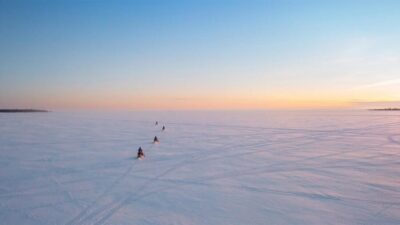
Once the briefing is finished, you cross approximately 0.8 kilometers of the Ostrobothnian Sea ice to Laitakari. This is the most memorable physical part of the experience. You are not looking at the sea from a shore or riding over it in a vehicle. You are walking across its frozen surface.
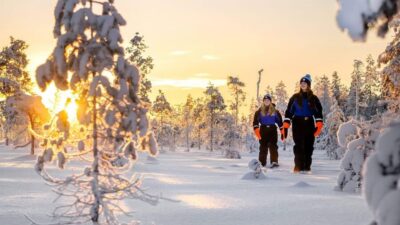
The full trek covers about 2 to 3 kilometers, including the return trip and the island walk. The terrain is described as flat, but snow and ice still demand more effort than an ordinary city walk. You should plan on a steady outdoor stroll, not a strenuous hike.
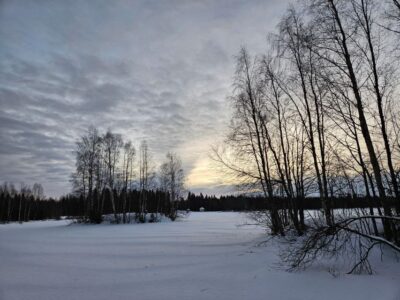
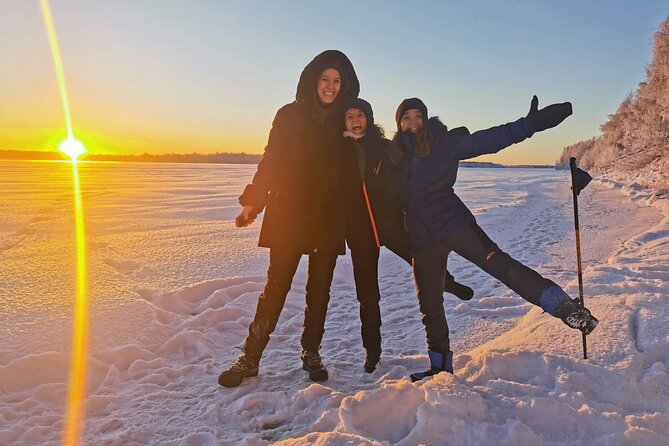
Sunset can add extra color to the crossing. The timing depends on the departure you choose and the season, so sunset is not guaranteed, but the winter light can make the sea-ice route especially attractive. Keep your camera ready, while also keeping your hands warm and your attention on the ground.
The guide is important here. You are not simply given poles and sent off alone. The ice-walking lesson and live supervision give the crossing structure, while the guide can explain the conditions as you move.
Exploring the deserted sawmill and village ruins
Laitakari’s industrial remains are the main historical stop. You visit the old sawmill area and the ruins of the village that once supported it. The site is now deserted, so do not expect a restored museum with rooms full of exhibits or a large visitor center.
What you get instead is a guided look at a former working community. The guide helps you make sense of the remains and explains how the mill operated within the wider wood industry. For many people, this will be more interesting than a display behind glass because the setting itself is the evidence.
The island also helps explain the daily life behind Finland’s timber economy. The tour includes a basic outline of how the wood industry was run, giving you a little practical context for the sawmill’s success. You do not need prior knowledge of Finnish industry to follow it.
Marko is one of the guides associated with this experience. His style, as described in the tour information, combines the island’s past with Finnish culture and humor. If you join him, expect the history to be presented in a personal and lively way rather than as a dry list of dates.
The guiding language is English or Finnish. If you do not speak either language, the historical explanations will be harder to follow. One useful improvement would be a written summary or small booklet in other languages, but no such material is included.
A completely different way to spend an Arctic day:
- Rovaniemi: Northern Lights Tour with Guaranteed Sightings
★ 4.6 · 3,836 reviews - Northern Lights Rovaniemi: Guaranteed Viewing & Unlimited Mileage
★ 5.0 · 2,321 reviews - Rovaniemi: Lapland Northern Lights Tour with BBQ
★ 4.0 · 1,569 reviews - Rovaniemi: Reindeer, Huskies & Santa Claus Village
★ 4.5 · 1,543 reviews
The return walk and the rhythm of the outing
After the visit, you walk back to SnowCastle over the ice. The return route gives you a second chance to notice the open sea, the snow, and the changing light. It also means the experience has a clear shape: prepare, cross, explore, return.
At 2.5 hours, the timing works well for a half-day plan. You have enough time for a proper explanation at Laitakari without committing an entire day to one activity. You can pair it with other Kemi attractions, but you should leave room around the stated duration in case weather affects the schedule.
This is a guided walk, not a free-time island visit. The group follows the guide’s route and timing. That is a benefit for safety and history, but it may feel limiting if you want to wander alone or take a long series of photographs.
What the $57 price buys you
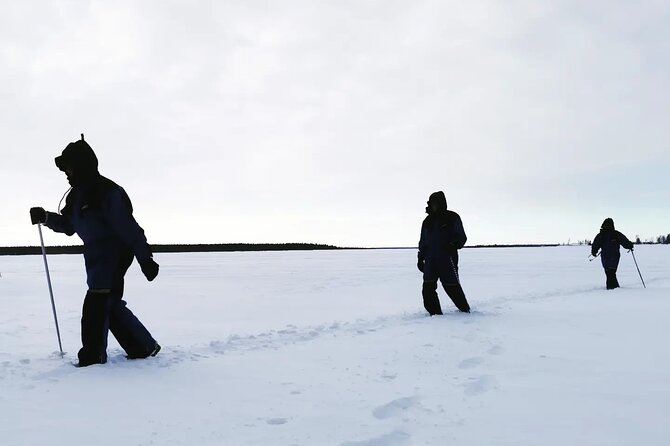
At $57 per person, the cost is reasonable if you value a local guide and a less standard Kemi activity. The fee includes the English or Finnish guided tour, icetrekking poles, the ice-safety instruction, the crossing to Laitakari, and the island visit.
The strongest value comes from combining three elements in one outing: a sea-ice walk, a lesson in moving safely on ice, and a focused history tour. You could perhaps walk on a frozen surface in another setting, but you would not automatically get the connection to Kemi’s origins and the sawmill industry.
The price does not include thermal outdoor clothing rental. Bring your own warm clothing or arrange rental separately. This is not a minor detail. Standing and walking in winter conditions for 2.5 hours can become uncomfortable quickly if your coat, gloves, boots, or layers are not suitable.
I would judge the price less favorably if you are mainly seeking dramatic scenery and do not care about local history. The views are part of the experience, but the island’s industrial story is what gives the excursion its purpose. If you want only a quick photo on the ice, a shorter activity may suit you better.
Who will enjoy this most
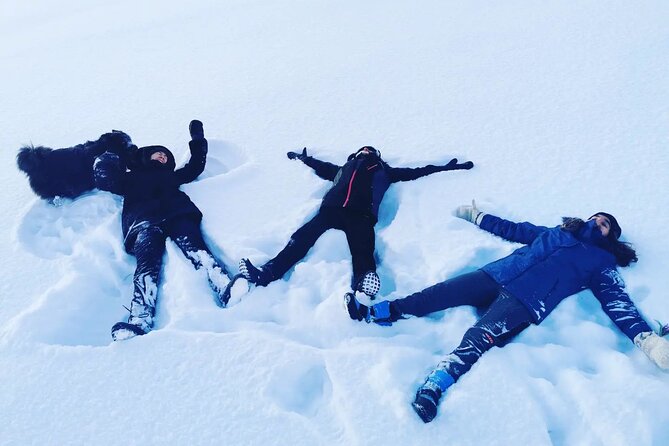
I recommend this for adults and older children who enjoy a calm outdoor activity with a clear cultural angle. You should be comfortable walking 2 to 3 kilometers on flat but snowy or icy ground and following safety instructions.
It is a good choice if you want to learn something specific about Kemi instead of spending all your time at large winter attractions. The tour changes the way you see the city by showing you the place and industry that came before it.
It also suits visitors who like guides with personality. Marko has been praised for his warmth, humor, and enthusiasm, and the guiding style appears to mix Finnish culture with the island’s history. One especially appealing detail is the personal touch available on small departures. On one New Year’s Eve outing, the guide was able to show the participant particularly scenic spots and take photographs.
This is not suitable for children under five, pregnant women, people with mobility impairments, wheelchair users, people over 80, or anyone weighing more than 331 pounds, or 150 kilograms. Those limits are important because the activity takes place outdoors on ice and snow, with no promise of wheelchair access or easy alternatives.
What to wear and what to expect in winter
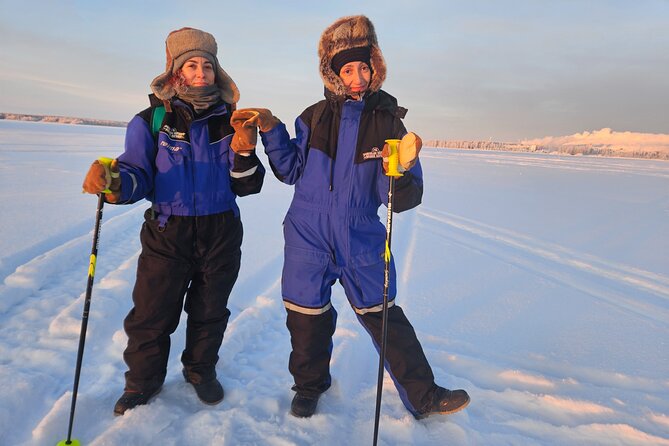
Bring warm clothing. The supplied information specifically notes that thermal outdoor clothing can be rented, but the rental is not included in the $57 price.
Dress for a full winter outing rather than a quick walk from a car to a building. You will spend time outside during the briefing, cross the sea ice, explore the island, and walk back. Warm layers, gloves, and suitable winter footwear are practical basics, not optional extras.
The provider can change the routing and duration because of weather. That may sound inconvenient, but it is the right approach for a sea-ice activity. A fixed route should never matter more than safe conditions.
The tour runs in English or Finnish. English-language guiding makes it accessible to many international visitors, while Finnish speakers receive the same local focus in their own language. If you need another language, plan to translate the main points yourself, since no alternative-language guide or audio option is included.
How this compares with a typical Lapland excursion
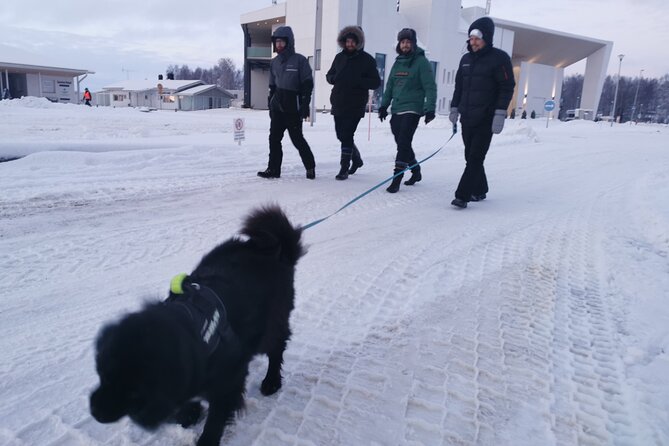
Many Lapland activities focus on speed, animals, fantasy settings, or carefully staged winter entertainment. Icetrek to Old Kemi takes a slower route. The activity asks you to notice how the ground feels beneath your feet and how a former industrial settlement shaped a modern city.
That makes it a strong fit for a repeat visitor or anyone who wants a break from highly packaged attractions. The ruins are not polished, and the story is not presented as a grand spectacle. You get a smaller historical site, a practical outdoor lesson, and a guide who connects the pieces.
The tradeoff is that Laitakari may feel understated if you expect a large attraction. The remains are valuable because of their story, not because they form a dramatic monument. Your enjoyment will depend on how much you like quiet places and guided interpretation.
The perfect overall rating from 19 reviews supports the idea that the mix of ice walking, scenery, and local storytelling works well for the right audience. The most consistent praise goes to the guides, especially Marko, and to the chance to learn something about both ice safety and the wood industry.
Should you book Icetrek to Old Kemi?
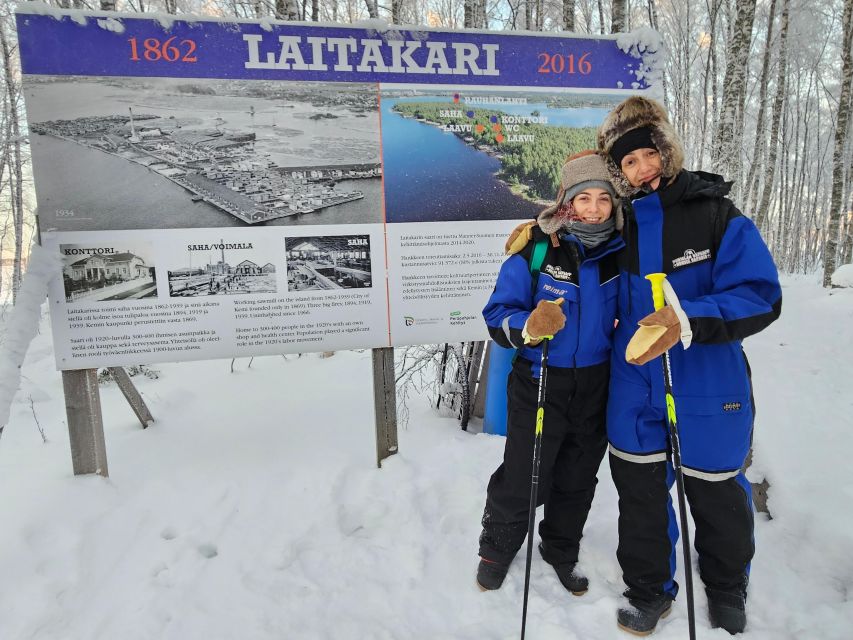
Book it if you want a two-and-a-half-hour winter outing with a genuine connection to Kemi’s past. The 0.8-kilometer sea-ice crossing is unusual, the poles and safety instruction add practical value, and Laitakari gives you a reason to care about the walk.
I would choose it over a more generic winter stroll if local history matters to you. I would also choose it if you enjoy guides who explain, joke, and point out details that you could easily miss alone.
Skip it if you dislike cold-weather walking, need step-free access, or mainly want a quick scenic stop. Weather can change the route, thermal clothing costs extra, and the deserted industrial site will not appeal to everyone.
For the best chance of enjoying it, arrive warmly dressed, expect flat but wintry ground, and think of the outing as a small history lesson that happens to begin by walking across the sea.
FAQ
Where does the Icetrek to Old Kemi tour start?
The meeting point is the SnowCastle of Kemi, at the Experience365 reception hall.
How long does the experience last?
The tour lasts about 2.5 hours. Weather conditions can change the duration or route.
How far do you walk?
The complete icetrek covers approximately 2 to 3 kilometers on sea ice and flat terrain. The crossing to Laitakari is about 0.8 kilometers each way.
What languages are available?
The live guide conducts the experience in English or Finnish.
What is included in the price?
The price includes the guided tour, icetrekking poles, basic instruction on moving safely on ice, the trek to Laitakari, the island visit, a short history of Kemi, and an explanation of the wood industry.
Is thermal clothing included?
No. Thermal outdoor clothing can be rented, but rental is not included in the tour price. You should bring warm clothing.
Can the route change because of weather?
Yes. The provider may change the routing and duration without prior notice when weather conditions require it.
Who cannot take part?
The activity is not suitable for children under five, pregnant women, people with mobility impairments, wheelchair users, people over 80 years old, or people weighing more than 331 pounds, or 150 kilograms.
Can I cancel for a full refund?
Yes. You can cancel up to 24 hours in advance for a full refund. The activity also offers a reserve-now, pay-later option.
Recently added around Rovaniemi
- Rovaniemi: Midnight Sun Photography Tour★ 5.0 · 3 reviews
- Snowmobile Safari in the Nature – Morning start★ 4.5 · 3 reviews
- Full-Day Snowshoeing Adventure in Amethyst Mine Pyhä Luosto★ 5.0 · 3 reviews
- Northern Lights Rovaniemi: Guaranteed Tour with Local Guide★ 3.5 · 3 reviews
- Day Trip to Ranua Arctic Wildlife Park from Rovaniemi★ 5.0 · 3 reviews
- Private Northern Lights Expedition by Lapland’s Experienced Team★ 5.0 · 3 reviews
- Rovaniemi: Family Snowmobile Trip with Guide and Picnic★ 3.0 · 3 reviews
- Rovaniemi forest foraging adventure: Pick, Prepare, Savor★ 5.0 · 3 reviews